

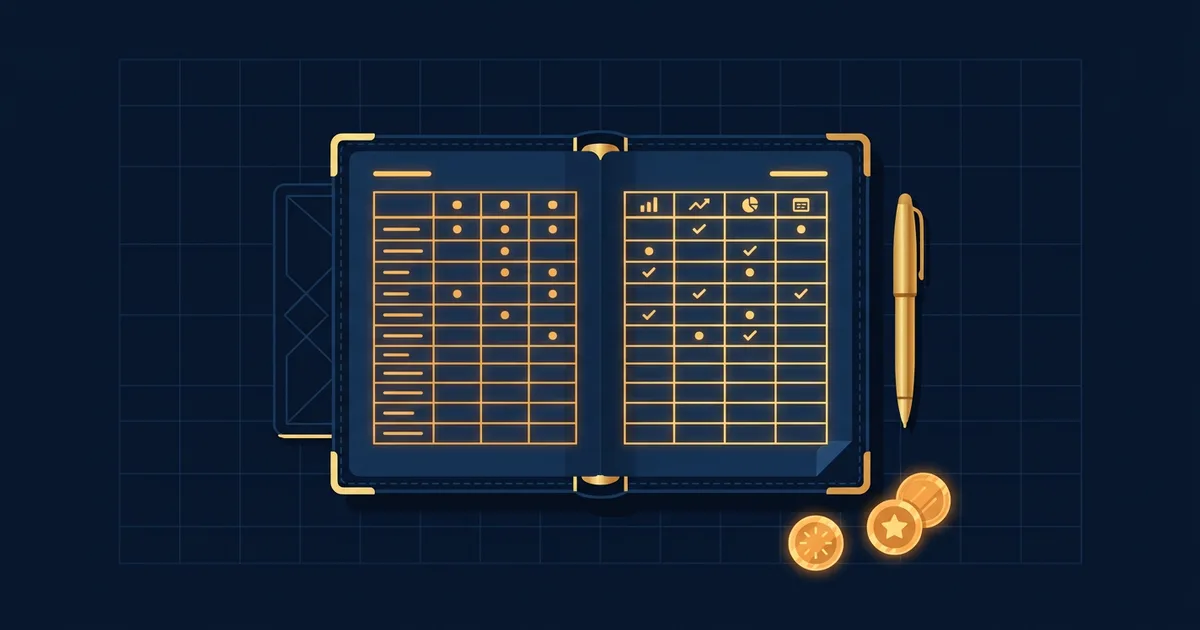
A tailor in Lapaz takes a measurement on a scrap of paper. A shopkeeper in Kaneshie remembers a deposit “in his head”. A catering business in Kumasi keeps customer orders in a WhatsApp chat that scrolls away forever.
These are not small habits. They are silent leaks.
When records live in notebooks and memory, three things happen in almost every Ghanaian micro business:
- Money disappears quietly. Deposits are collected and forgotten. Balances are never chased. Customers who would have paid are never reminded.
- Work is delayed or duplicated. Measurements, fabric choices and delivery dates are lost, so jobs are remade or late.
- Arguments happen. “I paid you GH₵200.” “No, you paid GH₵100.” Without a written record, the customer is right — and you are frustrated.
The good news: you do not need expensive accounting software. A simple, consistent record system — built with free tools — is enough to protect most small businesses.
This article explains the minimum essential records every Ghanaian MSME should keep, and how to move from paper to a simple digital system in one afternoon.
1. The hidden cost of paper notebooks
Notebooks are not the problem. Unstructured notebooks are.
A typical Ghanaian shopkeeper’s notebook contains prices, orders, debts, phone numbers, prayers and family reminders on the same pages. When a customer asks “when is my dress ready?”, the answer requires finding the right page, the right line and the right handwriting — while the shop is busy.
Worse, notebooks have real failure points:
- They get lost or damaged. Coffee spills, rain, and moving shops destroy years of records.
- They are one copy. If the notebook is stolen or burned, the business’s memory is gone.
- They do not remind you. A notebook never says “this balance is 30 days overdue” or “this fitting is tomorrow”.
- They cannot be searched. Finding one customer’s history means flipping pages, not typing a name.
The cost is not the notebook. The cost is the unpaid balances, missed deliveries and lost repeat customers that the notebook fails to protect.
2. The minimum essential records every business must track
Before choosing any tool, decide what you must record. Most Ghanaian MSMEs need just one core register per business type, with these fields:
For tailors, dressmakers and artisans (order register)
- customer name and phone number (WhatsApp number is best),
- order description (what was ordered, fabric, style),
- date promised (delivery date),
- agreed price,
- deposit paid,
- outstanding balance,
- status (cutting, sewing, first fitting, ready, delivered),
- notes (measurements reference, special requests).
For shops and retail (sales register)
- date,
- item sold,
- quantity,
- unit price,
- total,
- payment method (MoMo, cash, credit),
- customer name (for credit sales),
- balance outstanding (for credit).
For service businesses (job register)
- customer name and contact,
- job description,
- date received and date promised,
- quotation amount,
- deposit and balance,
- status (in progress, completed, delivered),
- notes.
That is it. Six to nine columns per row. If you track these fields consistently, you can answer every important question about your business: who owes me, what is outstanding, what is due this week, and how much did I actually sell today.
3. Moving from paper to free cloud spreadsheets
The cheapest reliable upgrade is a Google Sheet (free with any Gmail account). It is a spreadsheet that lives online, opens on any phone, and backs itself up automatically.
Why Google Sheets works for a small Ghanaian business:
- Free. No licence, no subscription.
- On your phone. You can update it while serving a customer.
- Auto-saved. A lost or stolen phone no longer means lost records.
- Shareable. A spouse, assistant or accountant can view it without touching your phone.
- Searchable. Type a customer’s name and find their history instantly.
- Backed up. Google stores it; you can also download a copy monthly.
A simple way to start
- Create one sheet called “Orders 2026” (or “Sales 2026”).
- Create columns matching the register fields above.
- Enter every new order the moment it is agreed — not at the end of the day.
- Update the status column whenever something changes.
- At the end of each week, filter the “balance” column to see who owes you.
If you want more structure later, tools like Airtable (free tier) add dropdowns and automatic views, but a Google Sheet is enough for most micro businesses for a long time.
4. Digital measurement and order cards for artisans
For tailors and craftspeople, measurements deserve their own record.
A digital measurement card captures: customer name, phone, date, and all key measurements (bust, waist, hip, length, sleeve, shoulder) plus fabric choice and style notes.
The card should travel with the order: from cutting to sewing to final fitting. When the customer returns for a second order, the card means no re-measuring and no guesswork — a huge trust builder.
You can build this as:
- a section within your main Google Sheet (one row per order, with a measurement column block),
- a simple Google Form that fills the sheet automatically — customer details typed once, saved forever,
- a photo of the customer’s order card attached to the sheet row.
The key is that measurements are never written on loose paper again. Every measurement has a home, and every home is searchable.
5. Generating professional invoices and receipts with MoMo transaction IDs
Many small business owners think invoices and receipts are for “big companies”. In practice, they are the cheapest trust tools available:
- An invoice says what was agreed: item, price, deposit, balance, delivery date.
- A receipt proves payment was received, with the MoMo transaction ID.
A simple invoice can be a Google Docs template with your business name, the customer’s name, the items, amounts and your payment details. You fill it in, share it as a PDF on WhatsApp, and keep a copy in your sheet.
When a customer pays by MTN MoMo, Telecel Cash or bank transfer, always record the transaction ID in your register. That one field prevents almost every “I paid, you didn’t receive it” argument — you can look up the transaction instantly and show the customer.
You do not need GRA-certified VAT invoicing for this. These are simple business records that help you operate. If you need formal tax-compliant invoicing, seek a qualified accountant’s guidance for your VAT status.
For the full setup — what every invoice should contain, how to match MoMo payments to invoices, and when a PDF stops being enough — see Invoices and Payment Receipts for MoMo Businesses in Ghana.
6. Weekly cash reconciliation: matching MoMo and cash with sales
The final habit is the one that catches leaks: weekly reconciliation.
Once a week, do this simple check:
- Open your MoMo wallet and note the balance and transaction history.
- Open your bank account (if used) and note the balance.
- Add your cash in hand.
- Compare the total with what your records say sales should have produced, minus expenses.
If the numbers do not match, find out why. Common reasons: a sale not recorded, a deposit not entered, a refund not noted, or money taken for personal use without being recorded.
Reconciliation does not have to be perfect accounting. It just has to be done, weekly, on the same day, for 15 minutes. Over a month, it will recover more money than the time costs.
If a mismatch ever traces back to goods you released against a payment that never truly cleared, see how to verify MoMo payments before delivery.
7. What to avoid when starting
- Do not buy accounting software yet. Spreadsheets first. If your records are consistent for three months, then consider paid tools.
- Do not record everything at once. Start with orders or sales. Add expenses and other registers later.
- Do not keep records only on your phone without a backup. Share the sheet with a trusted person or download a monthly copy.
- Do not hide records from yourself. A register that is not updated because “I’m busy” is a leak that grows while you work.
Ready to bring order to your records?
E Light Services helps Ghanaian micro and small businesses set up simple record-keeping systems — cloud spreadsheets, order trackers, invoice and receipt templates, and weekly reconciliation habits — built around how you actually work.
We also provide business systems setup for shops, tailors, schools, churches and service businesses, including lead tracking, quotation workflows and simple dashboards.
And if you want to understand where to start your digital journey, view our Digital Presence setup and starting prices.